
About the Nobel Peace Prize :
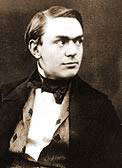 Alfred Nobel (1833-1896) was a Swedish chemical engineer and the inventor of dynamite and other explosives. He developed dynamite to help make mining safer. Nobel took keen interest in social problems, and his dream and motivation were to be of service to mankind. When he died he created a fund, with interest on the bulk of his estate dedicated to financing prizes that were to be awarded annually to the persons whose work had been of the greatest benefit to mankind. In 1900, the Nobel Foundation was established and statutes were adopted, creating the Nobel Prizes, including the Peace Prize.
The Nobel Peace Prize is awarded annually to the individual or group that has “done the most or the best work for fraternity between nations, for the abolition or reduction of standing armies, and for the holding and promotion of peace congresses.”
For more detailed information about the Nobel Peace Prize download the “Introduction to the Peace Prize” lesson on the Teach Peace Webpage or visit the Norwegian Nobel Committee Webpage at: www.Nobel.no or http://nobelprize.org/.
American Winners of the Nobel Peace Prize
20 individuals and 3 groups from United States have won the Nobel Peace Prize, about one quarter of the total number awarded. One important mission of the Nobel Peace Laureate Project is honoring our countrymen who have received this prestigious international recognition for their contributions to world peace. We also provide information on why they were awarded the Peace Prize.
Below is a list of United States of America Peace Laureates. Click on the name of a laureate to go directly to a Webpage that contains a brief description of what they did to be honored with the Nobel Peace Prize and “.pdf” files with more comprehensive information and other resources about these winners. These “.pdf” files are structured as lessons for students.
- Barack Obama, President of the United States, 2009
- Al Gore, former Vice President of the United States—2007
- Jimmy Carter, former President of the United States—2002
- International Campaign to Ban Landmines—1997
- Jody Williams, activist—1997
- Elie Wiesel, author of works on the Holocaust—1986
- International Physicians for the Prevention of Nuclear War—1985
- Henry Kissinger, U. S. Secretary of State—1973
- Norman Borlaug, plant biologist—1970
- Martin Luther King, Jr. , Minister and advocate of non-violence—1964
- Linus Pauling, chemist and opponent of nuclear weapons testing—1962
- George Marshall, Secretary of State—1953
- Ralph Bunche, United Nations diplomat—1950
- American Friends Service Committee —1947
- John Mott, peace activist—1946
- Emily Balch, peace activist—1946
- Cordell Hull, Secretary of State—1945
- Nicholas Murray Butler, President of Columbia University—1931
- Jane Addams, social worker—1931
- Frank Kellogg, Secretary of State—1929
- Charles Dawes, Banker and later Vice-President of the United States—1925
- Woodrow Wilson, President of the United States—1919
- Elihu Root, Diplomat and former U. S. Secretary of State—1912
- Theodore Roosevelt, President of the United States—1906
Photo: Courtesy of and Copyright © The Nobel Foundation